
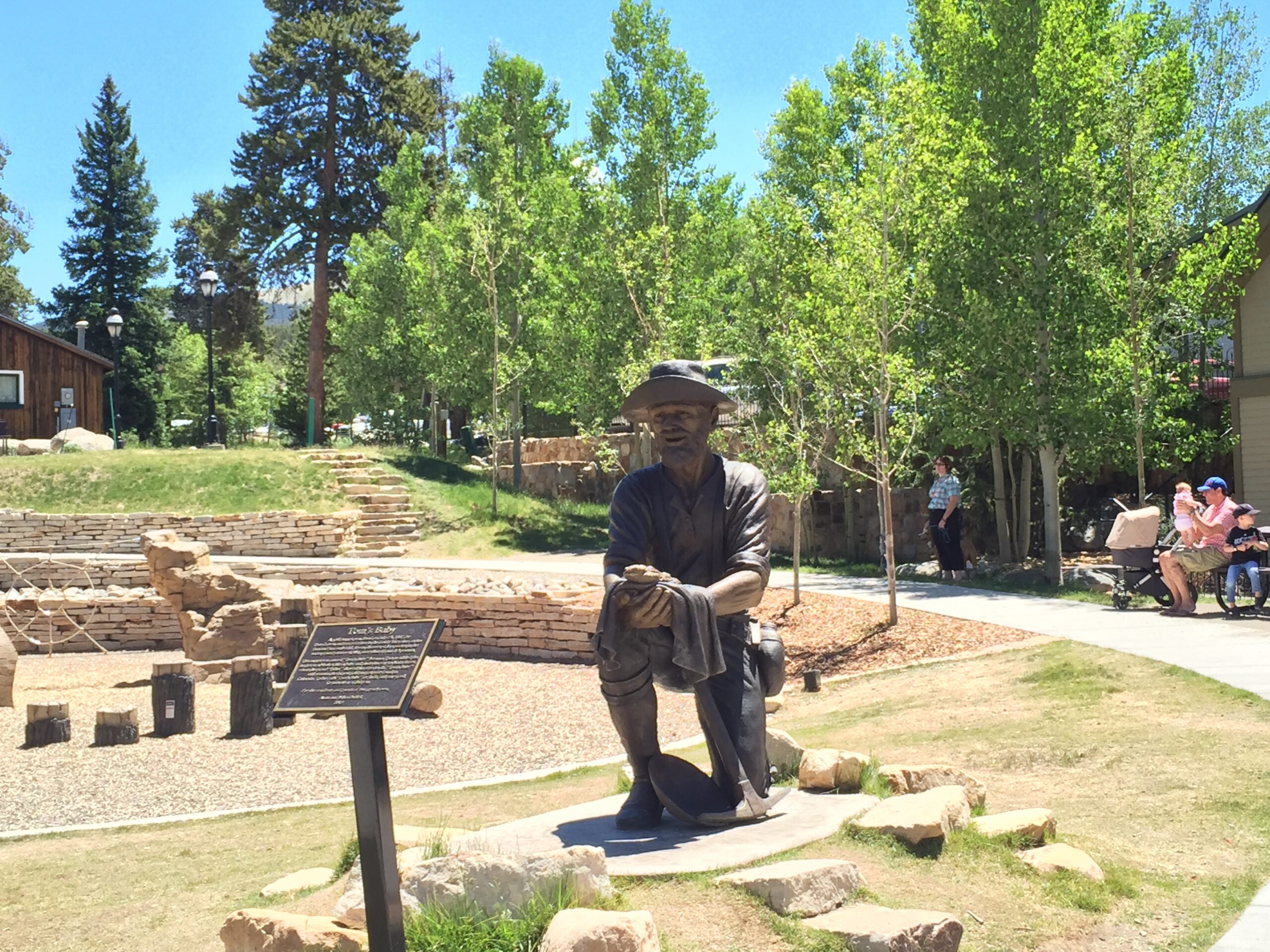
Breckenridge’s mining history is filled with tales of grit, luck, and the occasional jaw‑dropping discovery—but few stories shine quite as brightly as Tom’s Baby, the largest gold nugget ever found in the state. Its journey from a dusty mountainside near Breckenridge to a museum display in Denver spans more than a century of mystery, misplaced treasure, and enduring legend.
A Golden Discovery in 1887
On July 23, 1887, prospectors Tom Groves and Harry Lytton were working the mineral‑rich terrain of Farncomb Hill, just outside Breckenridge, Colorado. While blasting through rock, the pair uncovered a spectacular cavity lined with crystals and shimmering gold. Embedded within was an extraordinary mass of solid gold weighing 13.5 pounds before cleaning—an astounding find for any era.
Groves wrapped the nugget in a blanket and proudly carried it into town like an infant, instantly inspiring the nickname “Tom’s Baby.” The arrival of the gold sparked excitement across the mining camp, cementing its place in Colorado lore.

Unlike many polished, water‑worn placer nuggets, Tom’s Baby was a crystalline gold specimen—coarse, raw, and dazzling. Its structure formed in underground cavities called vugs, where hot, mineral‑rich fluids once deposited intricate networks of “wire gold.” Farncomb Hill was already famous among collectors for such unusual formations, but Tom’s Baby stood above them all.
At 156 troy ounces, the nugget remains the largest ever discovered in Colorado—an extraordinary feat given the state’s reputation for producing fine flakes rather than large nuggets.
A Mystery That Lasted Nearly 70 Years
After the excitement of its discovery, Tom’s Baby embarked on a more mysterious chapter.
The nugget was reportedly sent to Denver shortly after it was found, where its trail grew increasingly fuzzy. At some point, it became associated with the growing mineral collections that would later form the Denver Museum of Nature & Science. But by the early 20th century, Tom’s Baby seemed to disappear entirely.
It wasn’t until 1972—nearly seven decades after it vanished—that a researcher investigating historical Breckenridge collections stumbled upon a mislabeled wooden crate in a Denver bank vault. Inside, astonishingly, was Tom’s Baby, tucked away and marked as “dinosaur bones.”
When the nugget was recovered, its weight had dropped to around 8–10½ pounds, leaving a lingering mystery about what happened to the missing portion. Despite speculation, no one knows where the missing gold went.
A Priceless Piece of Colorado History
The tale of Tom’s Baby continues to influence Breckenridge’s culture. A bronze sculpture depicting the famed nugget now stands in Prospector Park, inviting visitors to rub it for luck. The artwork serves as a reminder of the area’s golden history and the outsized personalities of the miners who shaped it.
Nearby, ski trails like Tom’s Baby and Tom’s Mom pay tribute to the legendary find, keeping its story alive for future generations of adventurers and history lovers.

Tom’s Baby isn’t just a large gold nugget—it’s a symbol of Colorado’s mining heritage, the perseverance of its prospectors, and the quirks of history that can send a priceless treasure into obscurity. From its dramatic discovery to its decades‑long disappearance and eventual rediscovery, the story of Tom’s Baby embodies the spirit of the American West: unexpected, rugged, and always full of surprises.
If you ever find yourself in Denver or Breckenridge, take a moment to visit the sites connected to this glittering chapter of Colorado history. After all, Tom’s Baby is more than a nugget—it’s a legend.