
Recent headlines about Steamboat Resort using its snowmaking system to help protect the mountain from wildfire have sparked an interesting question: Has this been done before? And for that matter, when did snowmaking first begin in Colorado?
While snow guns are typically associated with creating pristine ski conditions, Steamboat recently demonstrated a very different use for the technology. Instead of producing snow, the resort operated 41 snowmaking guns to spray water across strategic areas of the mountain, soaking vegetation and infrastructure as part of a wildfire preparedness effort.
Although the story has captured national attention, the concept isn’t entirely new. As wildfire seasons across the West have become longer, hotter, and more destructive, ski resorts in states such as California, Idaho, and Colorado have begun repurposing their snowmaking systems as large-scale sprinkler networks. These systems can help protect chairlifts, buildings, and surrounding forests from advancing wildfires by creating moisture barriers in vulnerable areas.
It’s a fascinating example of how existing technology can adapt to meet new challenges.
The Origins of Snowmaking in Colorado
Long before snow guns were being used to combat wildfires, they were revolutionizing the ski industry itself.
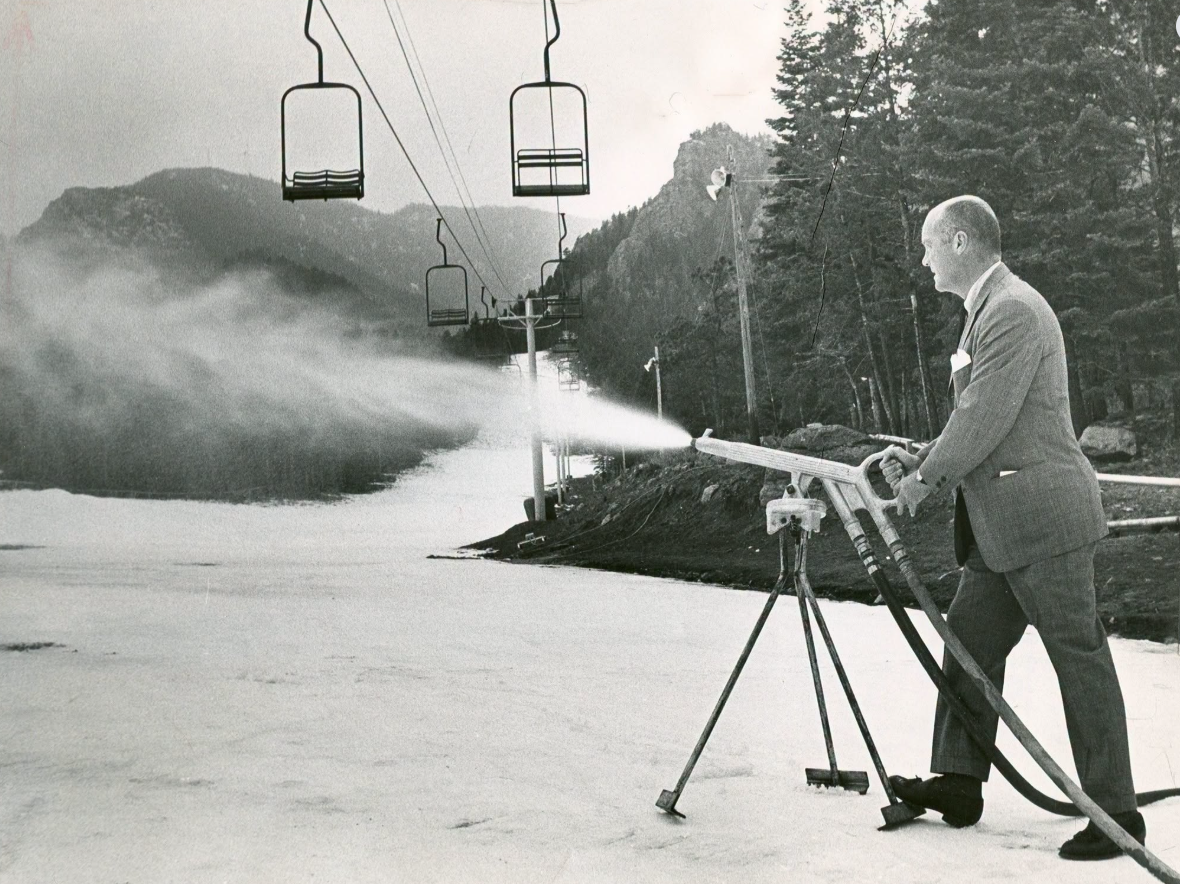
Colorado’s first documented snowmaking demonstration took place at Ski Broadmoor in Colorado Springs on January 1, 1960. At the time, snowmaking was still a relatively new concept, and the idea of creating snow on demand seemed almost futuristic.
A few years later, Loveland Ski Area became the first major Colorado ski resort to install a snowmaking system during the 1967-68 ski season. In a creative example of resourcefulness, the resort utilized surplus compressors from the construction of the Eisenhower Tunnel project. The system helped provide more reliable early-season skiing and marked the beginning of a new era for Colorado resorts.
By the mid-1970s, snowmaking had become an essential part of mountain operations. Resorts such as Winter Park embraced the technology to extend seasons, improve snow coverage, and provide dependable opening dates for visitors.
What began as a tool for enhancing skiing soon became a cornerstone of the modern ski industry.
A Technology Finds New Purpose
Today, snowmaking technology serves a role its early pioneers likely never imagined.
As mountain communities face increasing wildfire risks, the same systems once designed exclusively to make snow are now helping protect critical infrastructure and natural landscapes. The ability to distribute large volumes of water across difficult terrain has transformed snowmaking equipment into a valuable component of wildfire mitigation and emergency preparedness strategies.
It’s a remarkable reminder that innovation often finds new life in unexpected ways. Technologies created to solve one problem frequently evolve to address entirely different challenges as circumstances change.
Breckenridge Ski Resort eventually grew its snowmaking operation into one of the largest in North America, and by the late 2010s was often described as having the continent’s largest and most technologically snowmaking system.
A Photo That Tells a Larger Story
The accompanying photograph captures Steve Knowlton, a 10th Mountain Division veteran and Colorado Snowsports Hall of Fame member, demonstrating snowmaking at Ski Broadmoor in 1960. More than six decades later, the image offers more than a glimpse into the past. It highlights the beginning of a technological journey that continues to shape Colorado’s mountain communities today.
History isn’t just something we preserve. It’s something that continues to influence the present and inspire the future.
A picture may be worth a thousand words, but it can also raise a thousand questions.
*Article inspiration – Colorado Snowsports Museum