
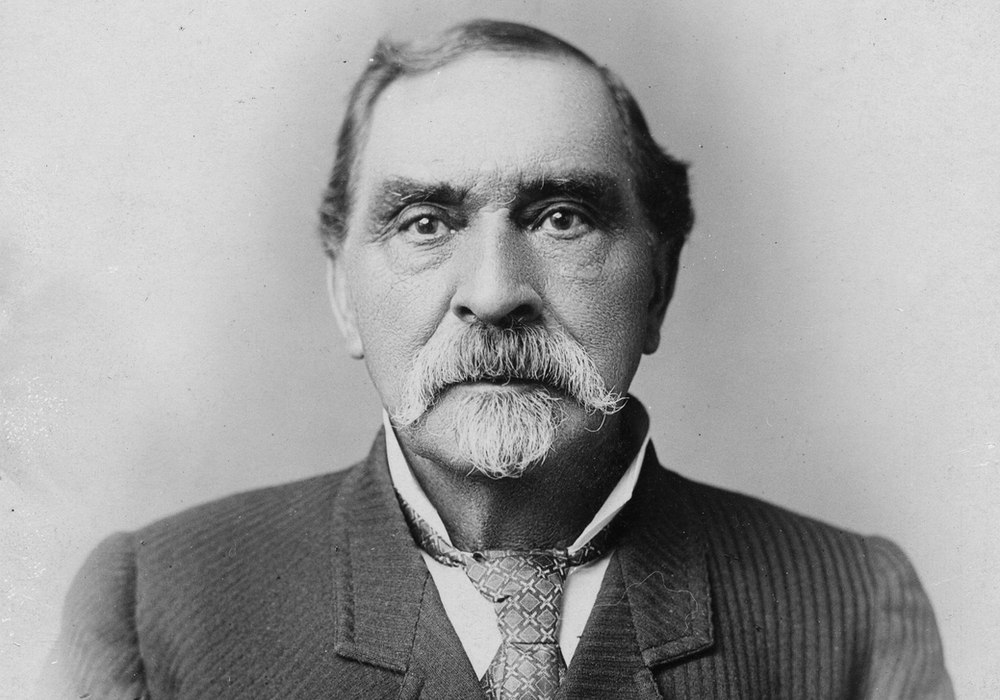
Breckenridge has had more than its share of fascinating and influential people living here. None stands out more than Barney Ford. Barney Lancelot Ford, born into slavery in 1822, rose from bondage to become one of Colorado’s most influential businessmen, civil rights advocates, and community leaders. His remarkable journey—from enslaved youth to restaurateur, hotelier, mine investor, political activist, and Breckenridge icon—stands as one of the most inspiring life stories in the American West.
Early Life and Escape to Freedom
Barney Ford was born on January 22, 1822, in Stafford, Virginia, to an enslaved mother and a white plantation owner. He spent his youth enslaved in South Carolina, where his mother risked punishment to teach him the basics of reading and writing—an act that planted the foundation for his future intellectual and entrepreneurial pursuits.
In his late teens or early twenties, Ford took a daring leap toward freedom. Assisted by abolitionists connected to the Underground Railroad, he escaped north and made his way to Chicago. There he educated himself further, took up barbering, and became immersed in abolitionist circles. It was in Chicago that he met his future wife, Julia Lyoni, and adopted the name “Barney Lancelot Ford,” borrowing “Lancelot” from a steam engine.
Journeys to Central America
The California Gold Rush of 1851 enticed Ford westward, but his route by sea led him and his wife to the port of Greytown, Nicaragua. Enchanted with the community and recognizing economic opportunity, they stayed and opened a hotel catering to American travelers. The business prospered until 1854, when Greytown was bombarded by an American ship in a territorial dispute, destroying Ford’s hotel. Undeterred, he started anew—first working as a steward on Lake Nicaragua, then opening an additional hotel. Political instability ultimately forced the Fords back to Chicago.
During this period, Ford remained active in abolitionist efforts and may have operated a livery business that functioned as a stop on the Underground Railroad. His success in hospitality and his experiences with resilience in the face of loss foreshadowed the endurance that would define his life in Colorado.
Arrival in Colorado and Early Setbacks
Barney Ford arrived in the Colorado Territory in 1860, following the Pike’s Peak Gold Rush. He first lived in Denver and Central City before settling briefly in Breckenridge, where he operated a boardinghouse. However, discriminatory laws barred Black men from holding mining claims. When Ford and his party attempted to claim gold‑rich land, they were run out of Breckenridge by law enforcement—a painful precursor to the racial barriers he would continue to confront.
Returning to Denver, Ford opened a barbershop and worked tirelessly to build capital. By 1862, he had earned enough to purchase his building on Blake Street. There he opened his first restaurant in 1863—only for it to be destroyed by the Great Fire of Denver later that year.
Entrepreneurial Rise in Denver
Ford responded to this setback with characteristic determination. He secured a substantial bank loan—testament to the respect he had earned—and rebuilt on Blake Street. His new building housed a barbershop, the People’s Restaurant, and a saloon, becoming one of the city’s finest establishments. He later expanded into hotels, opening the Inter-Ocean Hotel in Denver in 1873 and another in Cheyenne. These ventures earned him a reputation as one of the West’s premier hospitality entrepreneurs.
By the 1870s, Ford was one of the richest men in Colorado, with an estimated worth exceeding $250,000. Yet he never forgot those in need—he provided jobs, money, and food to newly freed African Americans arriving in the West, inspired by early support he had received from philanthropist Clara Brown.
Return to Breckenridge and New Prosperity
After financial setbacks in the late 1870s, Ford returned to the mountain town he had once been forced to flee. In 1880 he reestablished himself in Breckenridge, opening a successful restaurant and making shrewd mining investments. The prosperity he generated there enabled him to build a stately Victorian home for his family on Washington Avenue in 1882. The house, beautifully restored, now operates as the Barney Ford House Museum, honoring his legacy in the town.

Ford’s establishments in Breckenridge—including Ford’s Chop Stand and later Ford’s Chop House—became local favorites. Known for fine cooking and warm hospitality, his businesses attracted miners, travelers, and community leaders alike. His success helped cement his reputation as one of the region’s pioneering entrepreneurs.
Civil Rights Activism and Political Influence
Ford’s influence extended well beyond business. He was a key advocate for Black suffrage in the Colorado Territory. When Colorado first applied for statehood in the 1860s, Ford and fellow activists petitioned Congress to reject the application because the proposed constitution allowed only white men to vote. Their efforts were successful, and Colorado was not admitted until 1876—this time with universal male suffrage included.
He also worked to establish educational opportunities for African American children and adults and supported the growth of African Methodist Episcopal churches in Denver. His activism and philanthropy made him a respected leader statewide. In recognition of his contributions, the Colorado State Capitol features a stained‑glass portrait of Barney Ford—an honor given to no other African American of his time.
Later Years and Legacy
Barney Ford died in Denver on December 14, 1902, leaving behind a legacy of resilience, enterprise, and social impact. His life story is preserved at multiple historic sites, including his restored home museum in Breckenridge and the Barney L. Ford Building in Denver, recognized for its connection to the Underground Railroad.
In recent years, Ford’s legacy has received renewed attention. Breckenridge and the State of Colorado regularly honor his contributions, and documentaries, museum exhibits, and historical research continue to shed light on his remarkable achievements. In 2022, Colorado celebrated “Barney Ford Day,” and in 2025, the Barney Ford Museum was added to the National Underground Railroad Network to Freedom.
Conclusion
Barney Ford’s life is a quintessential American tale of perseverance against overwhelming odds. Born enslaved, he became a respected businessman, civil rights leader, and community figure whose influence spanned Denver, Breckenridge, Cheyenne, and beyond. His story illuminates both the challenges and triumphs of African Americans in the West and stands as an enduring testament to courage, ingenuity, and justice.
Today, visitors to Breckenridge can walk the rooms of his lovingly restored home, gaining insight into a man whose legacy continues to inspire Colorado and the nation