
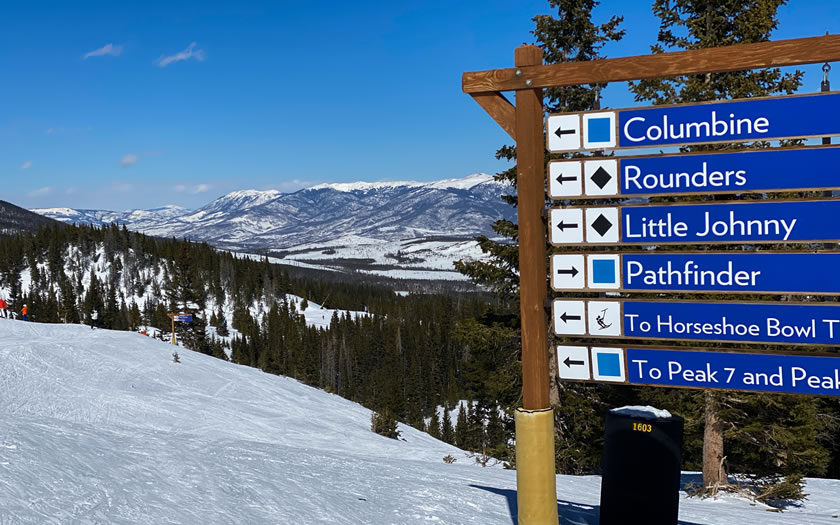
At Breckenridge Ski Resort, Columbine is known as a graceful, approachable ski run—smooth, scenic, and inviting. Its name feels softer than many of the resort’s mining‑era or frontier‑inspired trails, and that’s fitting. Columbine isn’t named for danger or ambition, but for Colorado identity itself, drawing from both natural history and cultural symbolism that long predates ski lifts and trail maps.
The columbine flower became Colorado’s state flower in 1899, chosen for its resilience and widespread presence in high alpine environments. Growing naturally between 6,000 and 10,000 feet, columbines thrive in the same elevations that once challenged miners and now delight skiers. Their ability to survive harsh winters and short growing seasons made them a quiet symbol of perseverance—one admired by early settlers even if they never articulated it outright.

During Breckenridge’s mining era in the late 19th century, wildflowers like columbines were among the few gentle elements in an otherwise punishing landscape. They appeared briefly after snowmelt, offering color and calm amid rock piles, tailings, and timber scars. Miners referenced them in letters home, diaries, and local descriptions—not because they were valuable, but because they were reassuring. The flowers meant spring, survival, and continuity.
When Breckenridge Ski Resort began naming trails in the 1960s and 1970’s, planners intentionally balanced rugged mining references with names that reflected the mountain’s natural character. Columbine was chosen for terrain that echoed the flower’s personality—flowing, friendly, and accessible. The run avoids extremes, favoring consistent pitch and open turns that encourage rhythm and confidence.
Columbine the ski run plays an important role on the mountain. It’s often a place where skiers refine technique rather than chase adrenaline, where families regroup or instructors build foundational skills. Like the flower itself, it doesn’t demand attention, but it earns appreciation through reliability and grace.
There’s also something quietly symbolic about skiing Columbine in winter when the flower itself lies dormant beneath the snow. The name preserves what can’t be seen—a reminder that the mountain’s beauty isn’t limited to peak season or dramatic moments. Beneath the surface, life and history persist.
In a resort defined by gold‑rush ambition and alpine bravado, Columbine offers a different legacy. It honors endurance without aggression, beauty without spectacle, and progress without force. Much like Colorado itself, it thrives by adapting to altitude, weather, and time—standing out not by dominance, but by balance.
Sometimes, the most memorable runs are the ones that simply feel right. Columbine has always done exactly that.