
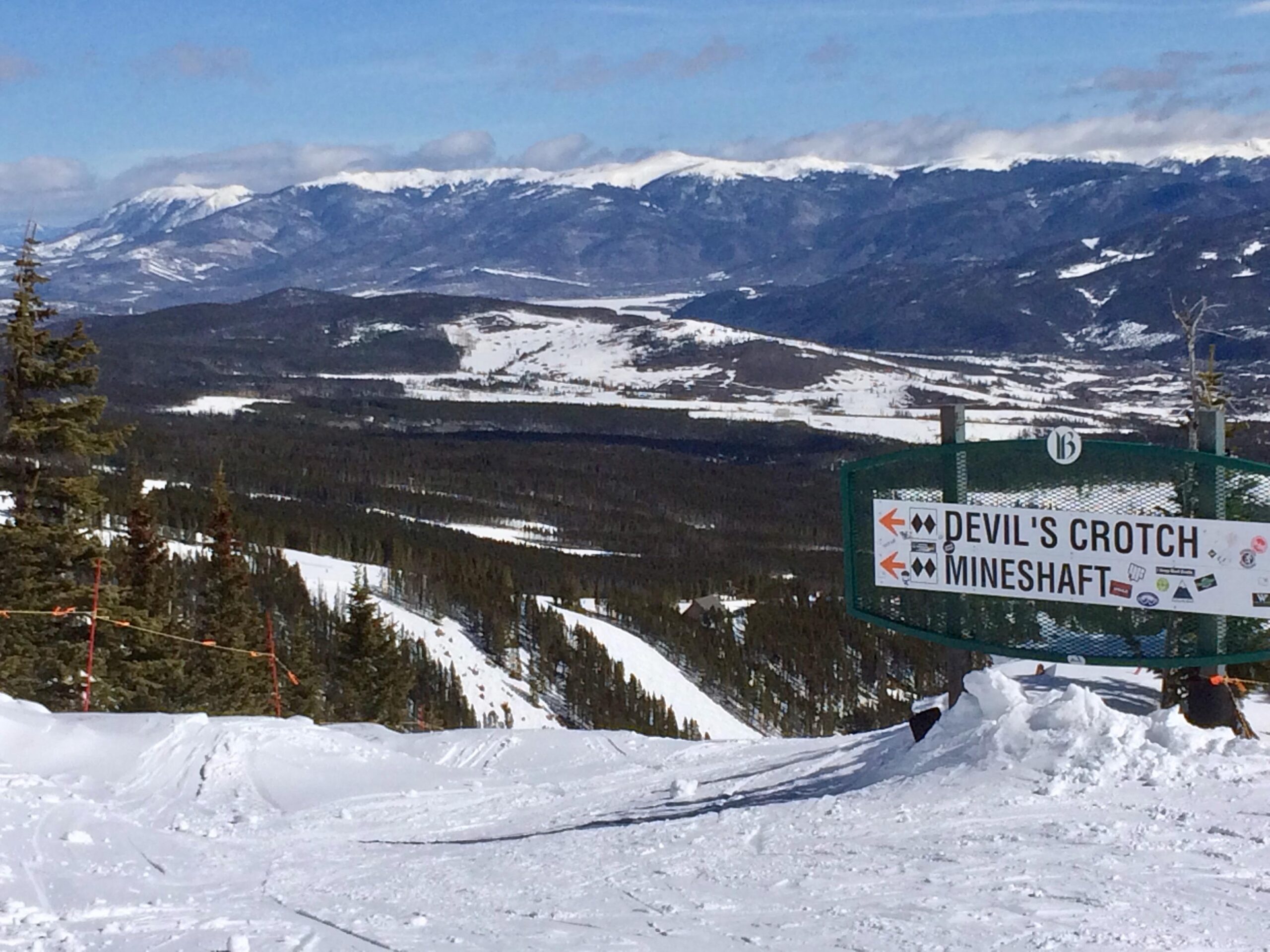
Among Breckenridge’s more eyebrow‑raising ski run names, Devil’s Crotch stands apart—not just for its shock value, but for how perfectly it reflects the mindset of the people who once lived and worked in the surrounding mountains. Long before skiers tested their nerves here, miners and trappers were already navigating this terrain, naming places based on fear, frustration, and dark humor rather than marketing appeal.
In the late 1800s, Breckenridge’s high alpine areas were dangerous and poorly understood. Steep gullies, narrow chutes, and wind‑loaded bowls posed constant threats, especially in winter. When early prospectors traversed Peak 10, they encountered a particularly harsh natural choke point where two ridgelines funneled snow, wind, and rockfall into a tight, unforgiving corridor. It was difficult to cross, hard to escape once entered, and relentlessly hostile during storms.
Frontier naming conventions were blunt and expressive, and this place earned a name meant to warn rather than flatter. Calling it Devil’s Crotch was less about crudeness and more about communicating danger quickly and memorably. If someone said a route ran near Devil’s Crotch, everyone understood what that implied: stay alert, or stay away.
When Breckenridge Ski Resort expanded onto Peak 10 decades later, the terrain retained its intimidating character. Rather than sanitizing the name, resort planners chose to preserve it—an intentional decision reflecting Breckenridge’s broader philosophy of honoring its unfiltered past. In an industry where many resorts favor family‑friendly naming, Devil’s Crotch stands as a reminder that these mountains were once named by people who didn’t concern themselves with brochures.
Today, the ski run lives up to its legacy. Steep, narrow, and often peppered with moguls, Devil’s Crotch is not a place for casual cruising. It demands commitment, confidence, and respect—qualities equally necessary for survival in the mining era. In this way, the run functions as a historical translation: modern skiers experience the same physical tension and mental focus that early mountaineers and miners once felt while simply trying to pass through alive.
There’s also a cultural evolution embedded in the name’s survival. What began as a warning has become a badge of honor. Skiers talk about “surviving” Devil’s Crotch, laughing afterward with the same gallows humor that once defined frontier life. The danger is controlled now, mitigated by patrols and avalanche work, but the emotional edge remains—and that’s the point.
Devil’s Crotch is more than a provocatively named ski run. It’s an artifact of unpolished history, preserved in plain sight. In choosing to keep the name, Breckenridge acknowledges that its roots were not refined or romantic, but raw, practical, and a little bit wild.
And fittingly, that same spirit still echoes between the turns.