
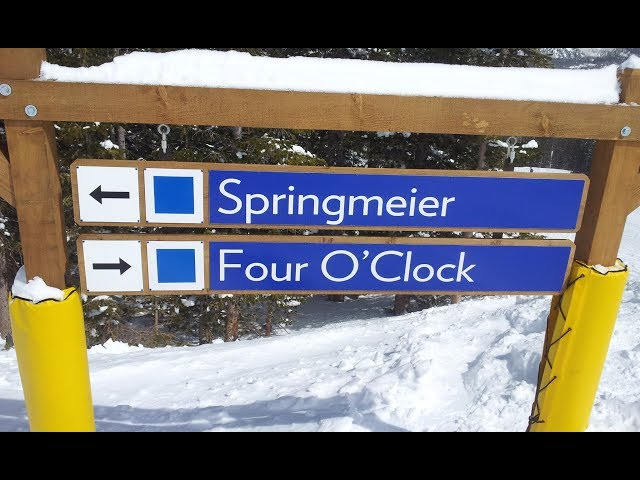
If any ski run at Breckenridge can truly claim to connect past and present, it’s Four O’Clock. Winding all the way from the upper mountain to the edge of town, this long, forgiving descent isn’t just a skier’s favorite—it follows the path of one of Breckenridge’s earliest travel routes, dating back to the gold rush era.
In the late 1800s, Breckenridge was a hard‑working mining town where daylight dictated survival. Miners, teamsters, and supply haulers began and ended their days around the sun. Local lore holds that workers aimed to be heading back into town by—quite literally—four o’clock in the afternoon. Harsh winters, sudden storms, and predator‑filled forests made traveling after dark risky business. Knowing when to turn back was essential.
The route that eventually became known as Four O’Clock functioned as a rough wagon and foot path connecting mines on the mountain to homes, saloons, and boarding houses in Breckenridge. It wasn’t glamorous and it wasn’t fast, but it was reliable. Over time, “Four O’Clock” became shorthand not just for the route, but for the habit of safe return—a daily rhythm engrained into mountain life.
When Breckenridge Ski Resort was developed in the 1960s, planners quickly recognized the value of this natural corridor. It offered a gentle grade, predictable fall line, and—crucially—a direct descent into town. Rather than cutting a new path, they leaned into history, transforming the old access route into one of the longest and most beloved ski runs at the resort.
Today, Four O’Clock is iconic for its accessibility. It’s the run that lets skiers glide right back to Main Street without boarding a lift or shuttle. Beginners love its forgiving pitch, intermediates enjoy its rolling rhythm, and experts appreciate it at the end of a long day when efficiency matters more than adrenaline. In many ways, it still serves its original purpose: getting people home safely.
There’s something deeply appropriate about that continuity. Modern skiers, chasing one last run before the lifts close, often check the clock instinctively—just as miners once did. The urgency has changed, but the habit hasn’t. Four O’Clock remains a boundary between work and rest, effort and reward.
The run also acts as a social equalizer. Families, locals, vacationers, and ski instructors all funnel onto Four O’Clock at day’s end, sharing space in a collective migration downhill. It’s one of the few runs where nearly everyone, regardless of skill level, ends up together.
Four O’Clock doesn’t impress with steepness or spectacle. Its greatness lies in how well it remembers what came before. Beneath the snow lies a path worn by boots, hooves, and wheels—by people who needed to get home before the light failed.
In a resort known for high‑alpine bowls and dramatic descents, Four O’Clock stands as a reminder that sometimes the most important run isn’t the hardest one—it’s the one that brings you back