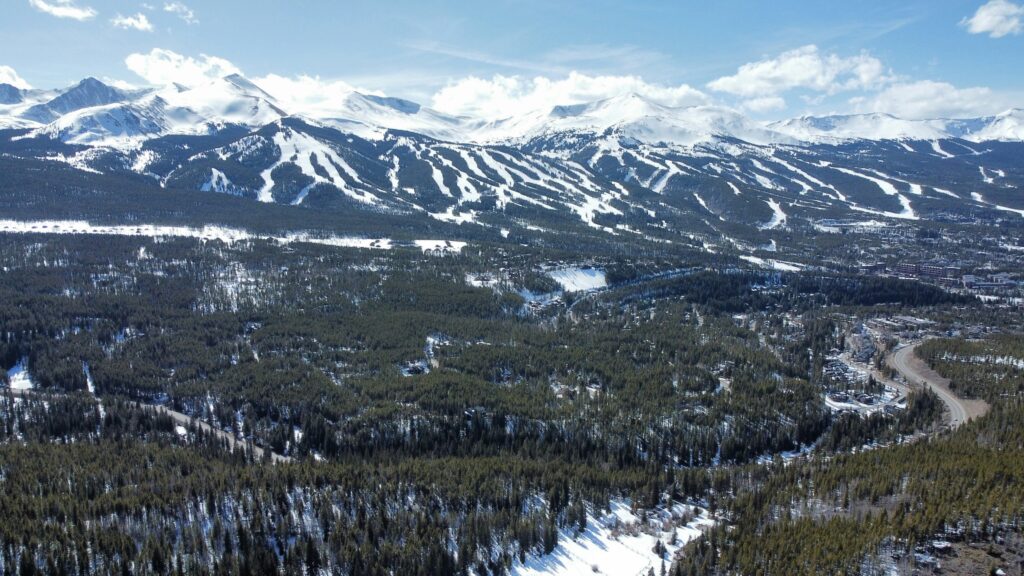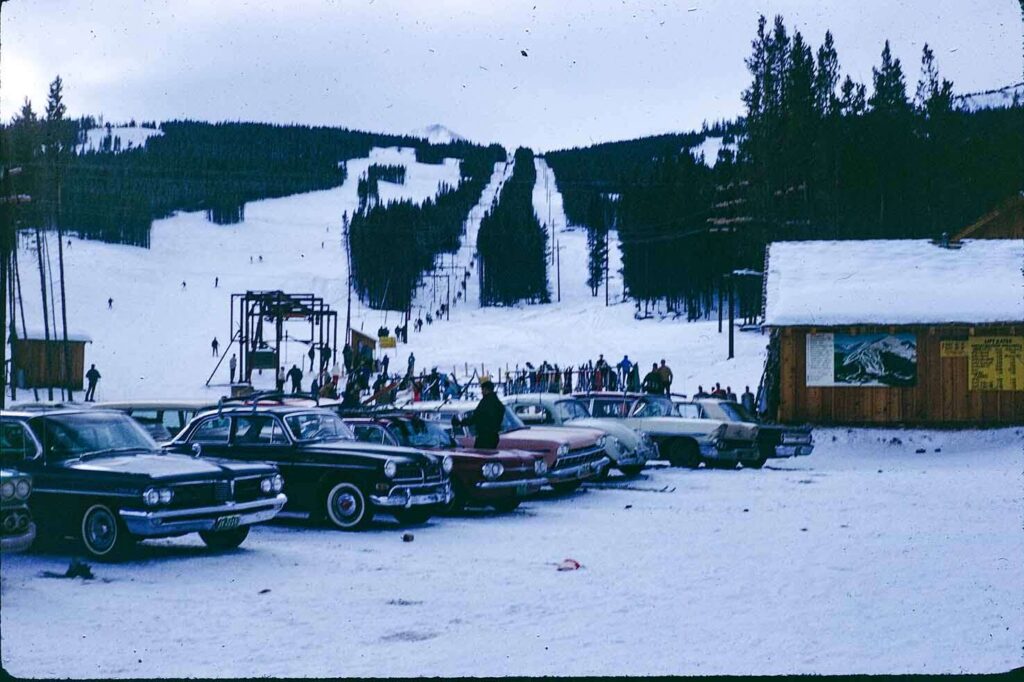
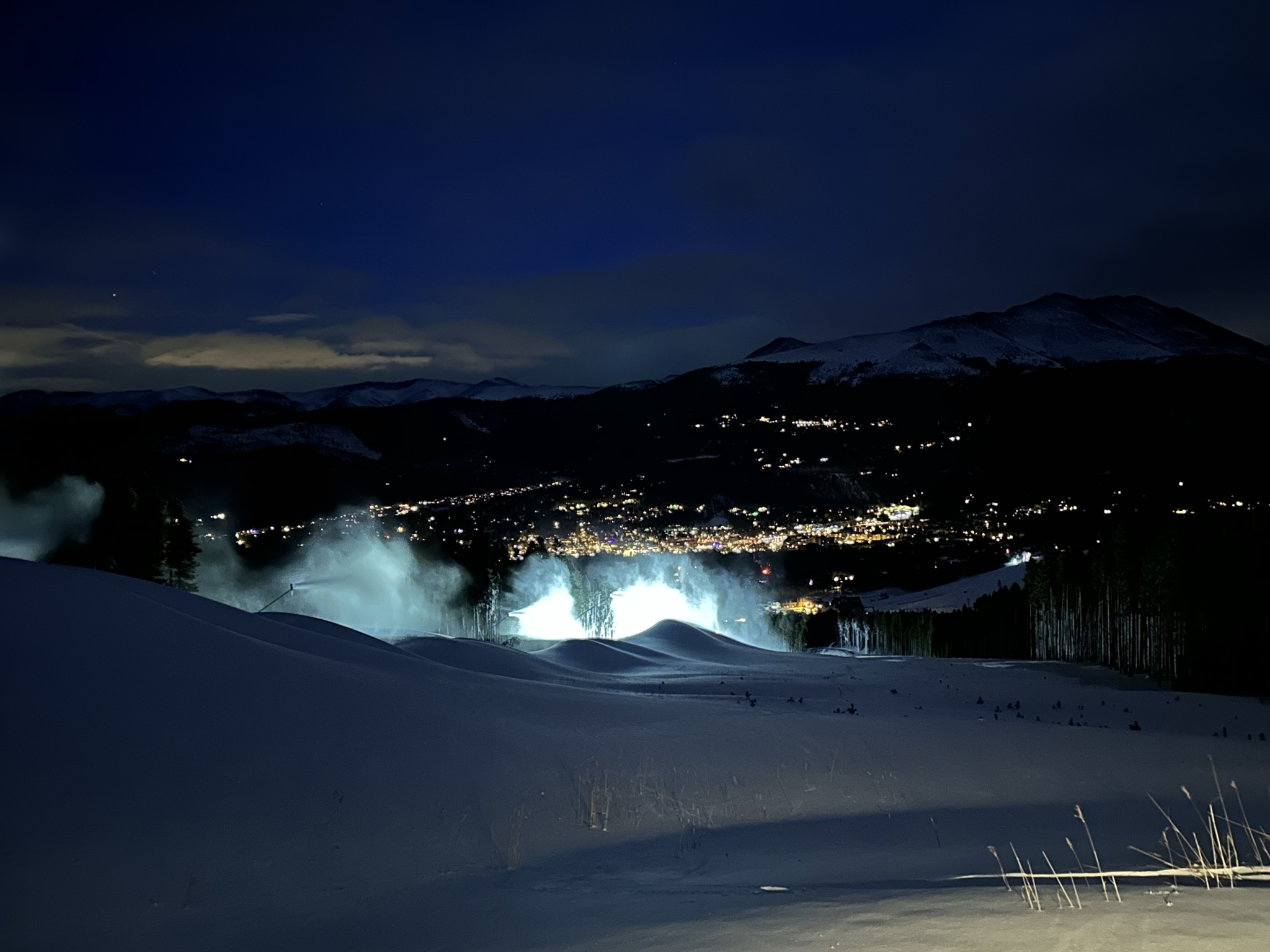
Long before the first natural snowflake drifts down onto the Tenmile Range, winter is already underway at Breckenridge Ski Resort. While most skiers and riders are still thinking about waxing skis or tuning boards, a little‑known group of mountain professionals is quietly laying the foundation for the entire season.
They’re called snowmakers—and without them, Breckenridge simply wouldn’t exist in the way we know it. And, most snowmakers keep their camera handy since the job provides some great and exciting scenery.
When Winter Starts Before Winter
The Breckenridge Snowmaking Team is typically in full swing by mid‑October, watching the forecast with a precision that rivals meteorologists. The key metric isn’t just air temperature—it’s wet‑bulb temperature, which factors in humidity as well. When the wet bulb drops below roughly 28°F, snowmaking becomes possible.
An interesting side note, the Jackson Hole Ski Resort calls their snowmakers Gunrunners.
This is why you might see snow blowing on a cold, dry 35‑degree night, and nothing happening at 25 degrees when the air is moist. Snowmaking is a balance of physics, weather, and timing, and conditions can change by the hour.

At the base of Peak 9, snowmaking often begins as early as late October. Early-season operations typically feature a mix of high‑tech TechnoAlpin fan guns and sled‑mounted air/water guns—Breckenridge uses rugged, mobile units from Ratnik Industries to tackle steeper terrain and hard‑to‑reach runs.

One of the Hardest—and Most Dangerous—Jobs on the Mountain
Snowmaking is widely considered one of the most demanding jobs at a ski resort, both physically and mentally. Crews work on steep, icy slopes at night, handling water pressures that exceed 700 psi and compressed air pushing beyond 95 psi. Add darkness, blowing wind, and subzero temperatures—and the margin for error becomes razor thin.
By December, temperatures can hover near –10°F even during the day. Frostbite is a constant concern. So are slips, trips, and falls while hiking icy runs with heavy gear. That’s why snowmakers wear extensive personal protective equipment (PPE): helmets, steel‑toed boots, eye and hearing protection, insulated gloves, and layers upon layers of cold‑weather clothing. Hearing protection (often double layers of hearing protection) is essential because many of the snow guns are louder than a 747 taking off.)

Ask a snowmaker about their job and you’ll probably get a quiet smile and a knowing look. Many will tell you—without hesitation—that they have the best job on the mountain.
A Mountain That Never Sleeps
Snowmakers work in teams of eight to nine people and staff the mountain 24 hours a day. When teams go out on the mountain, they always have a partner and they never go out without a radio. In the early season, you will often see a senior snowmaker and a team of two rookies with them. Early in the season, transportation includes trucks and UTVs; as snowfall increases, crews transition to snowmobiles, tracked vehicles, and snowcats.
Still, any snowmaker will tell you the truth: there’s a lot of walking involved. Many runs are simply too steep or narrow for motorized access, meaning long hikes in the dark with tools, radios, and packs. Some of Breckenridge’s ski slopes are almost too steep even for the snow cats to access without special winches and safety cables.

Day shifts focus on logistics—moving guns, configuring runs, performing maintenance, and preparing the system so night shift can operate efficiently. Night shifts, when temperatures are typically coldest, are all about production: adjusting water flow, air pressure, and nozzle settings to maximize snow quality and coverage.
The Science Behind the Snow
By mid‑November, Breckenridge usually reaches the point where snowmaking can operate around the clock. From town, you can see massive white plumes arcing into the night sky—artificial storms building the mountain one run at a time. High pressure water and air combine in the snowguns to send water crystals high in to the air.

Every gun run involves constant decision‑making. Snowmakers, supervisors, and system operators monitor wind, humidity, air temperature, sun exposure, and short‑term weather trends. Even a slight wind shift can determine whether snow lands perfectly on a trail—or disappears into the trees.
Team leads also balance system‑wide constraints:
- Personnel available to visit each gun while not being outside too long
- Water availability from the Blue River
- Electrical capacity, limited by local utility agreements
- Compressed air output from massive central air systems
- Resort priorities for which trails must open next
- Weather trends that help determine how long they can operate
Daily snowmaking meetings often include leadership from across the mountain—operations, trails, ski patrol, ski school, mountain safety, and even executive management. Opening terrain is a coordinated effort, not a single department’s decision.
One of the Largest Snowmaking Systems in the Country
Breckenridge operates one of the most extensive snowmaking systems in North America. More than 100 miles of buried pipe snake beneath ski runs, supplying high pressure water and air to thousands of hydrants and guns. High‑capacity pumps, industrial air compressors, and high‑voltage electrical infrastructure power the system.

This closed‑loop approach allows the resort to open six to eight weeks earlier than would otherwise be possible and stay open well into spring, even as natural snowfall tapers off.
Water is drawn directly from the Blue River in coordination with the Town of Breckenridge. When the season ends, the snow melts—and the water returns right back into the watershed.
“Why Aren’t You Making Snow Everywhere?”
It’s one of the most common questions snowmakers hear—and the answer is more complicated than it looks. Even the most advanced automated guns require frequent hands‑on visits, often five or six times per day. Production is limited by staffing, system capacity, water rights, air production, and electrical demand caps.
Warmer marginal temperatures—between 25 and 28°F wet bulb—mean water flow must be reduced to maintain snow quality. Push too much water, and you get slush instead of snow.
Every decision is a tradeoff.

Building the Base
Snowmaking doesn’t coat an entire run evenly. Instead, snowmakers build large piles known as whales. Once these whales reach critical mass, the Trails team steps in with snowcats to spread the snow evenly across the run.

On a trail like Springmeier, covering the route from Vista Haus to the Peak 8 base might take two full weeks of snowmaking. In colder temperatures, a run like Cimarron on Peak 10 can be ready for grooming in less than three days.
This manmade base is what holds natural snow in place and allows Breckenridge to withstand wind events, dry spells, and spring sunshine.
The Season After the Season
Snowmaking at Breckenridge typically runs through Christmas. By then, crews are exhausted—physically worn down from weeks of cold, long shifts, and heavy work. Universally, snowmakers say they’re happy when it’s over.
And after a few days of rest? They’re ready to get back out there.

The next time you click into your skis on opening day, take a moment to appreciate the unseen effort beneath your boots. Long before winter arrived naturally, Breckenridge’s snowmakers were already hard at work—building winter from the ground up.
Next time you see a snowmaking crew on the mountain, give them a big thumbs up!