
Breckenridge is best known for its Gold Rush heritage, ski culture, and lively Main Street—but tucked into its more recent history is a short‑lived landmark that locals still remember fondly: the Bell Tower Mall.
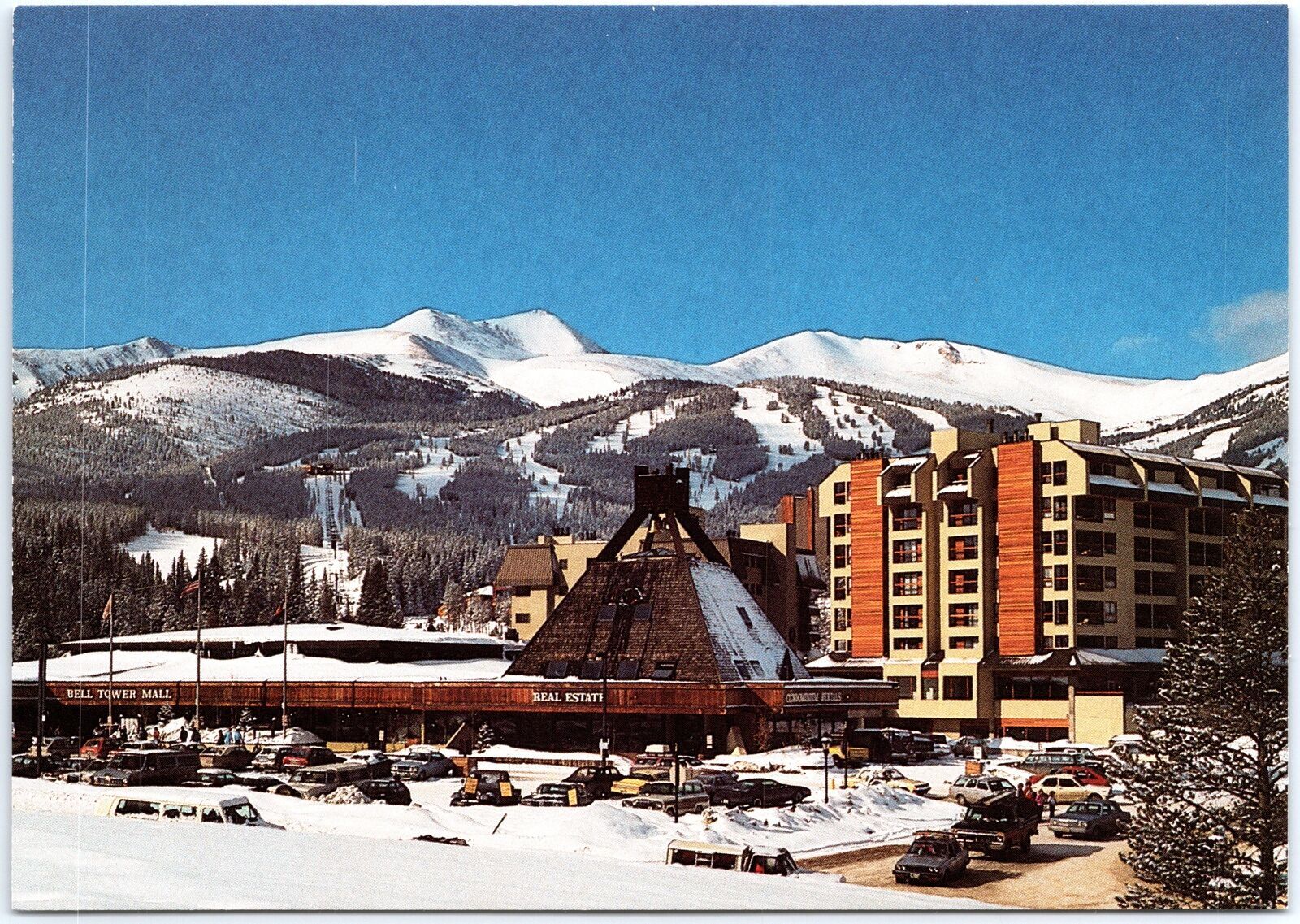
Built in 1971 on the west side of Main Street, the Bell Tower Mall was a striking 45,000‑square‑foot commercial building distinguished by its pyramid‑style hip roof and its prominent tower, which gave the mall its name. Its architecture stood out among Breckenridge’s historic wooden storefronts, representing an era when the town was transitioning from a quiet mountain community to a modern ski destination.
The Bell Tower Mall sat at the south end of town, directly across from what would later become the Tannhauser Condos—also constructed in the early 1970s as Breckenridge’s lodging options expanded to meet growing tourism demand. This pocket of Main Street began evolving rapidly as the ski boom brought new visitors, businesses, and energy to the area.

During its three decades, the Bell Tower Mall housed a rotating mix of shops and services—small retailers, local artisans, and ski‑town essentials that catered to both residents and vacationers. While it never reached the iconic status of Breckenridge’s Victorian‑era buildings, it became a fixture of the town’s everyday life.
Yet by the early 2000s, Breckenridge was investing heavily in revitalizing its commercial core. The Bell Tower Mall, aging and no longer aligned with the town’s updated vision for Main Street, was demolished in 2002. Its removal made way for Main Street Station, a modern mixed‑use development that brought new retail, dining, and lodging options to the south end of town.
Today, almost nothing remains of the Bell Tower Mall except archival photographs and the memories of locals who watched Breckenridge transform over the decades. The site continues to serve as a hub of activity—proof that the mall, though gone, played a role in shaping the town’s commercial footprint.
The story of the Bell Tower Mall is a snapshot of Breckenridge at a crossroads: balancing preservation with progress, honoring its mining‑town roots while embracing its future as a world‑class resort community. Even brief chapters in a town’s history leave lasting impressions, and the Bell Tower Mall is one such chapter—an emblem of Breckenridge’s journey through change.